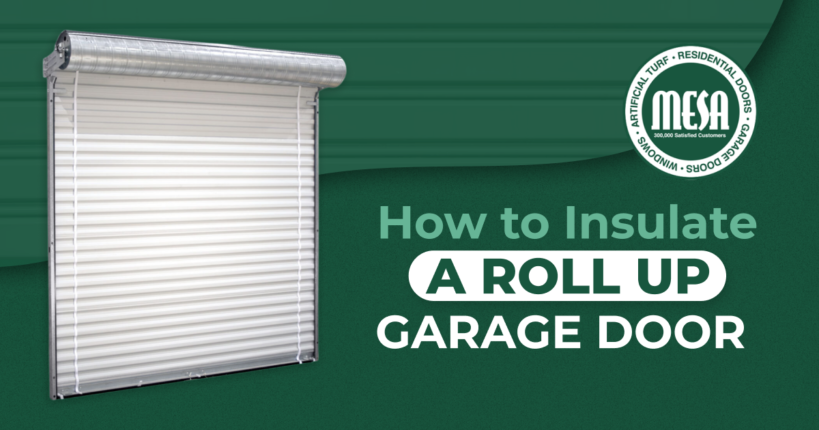
How to Insulate a Roll-Up Garage Door

Insulated roll-up garage doors are used in many settings. Constructed of thin slats that form a roll on top when the door is open, they’re often found in commercial buildings. They can also be used in homes, but there are more installation challenges compared to other garage doors. One of them is finding the right insulation if the door isn’t already insulated.

While roll-up doors are great for homes with limited space and are extremely durable and secure, installing one isn’t easy. Their industrial look often requires additional painting or finishing. Also, initial installation costs are often higher than those of other garage doors. Click here to learn more about the pros and cons of roll-up garage doors, but now, we’ll explain how to insulate one so your home or business is quieter and more energy efficient.

Steps to Insulating a Roll-Up Garage Door

Most other types of garage doors use thicker foam panel insulation. However, roll-up doors must be fitted with thinner insulation materials. These prevent the door from getting stuck. That being said, the process of insulating your garage door is generally as follows:

1. Choose and Prepare Your Materials: You’ll need a 2-millimeter thick foil/foam type insulation. Foil-backed polyethylene insulation is suited for roll-up garage doors. This dual-layer material is secured with a strong adhesive. If the material doesn’t come with an adhesive, you’ll need durable, double-sided tape; sharp-tipped screws and washers are optional, but they help stabilize the material once it’s installed.

Other types of suitable insulation can include:

  • Foam Board Insulation: Available in rigid panels, it offers excellent thermal resistance and provides structural support.
  • Fiberglass Insulation: Fiberglass is sold in rolls or batts, so it is suited for roll-up garage doors. It is affordable and provides good thermal resistance.
  • Reflective Insulation: Radiant barrier insulation has a foil-faced material that reflects heat away from your garage. It’s also lightweight and easy to install.

Another option is to purchase an insulated door. Pre-installed header seals and top and side draft stops offer protection from environmental elements. To ensure proper fitting, consider that the header seal extends up to 5 inches from the door curtain, and the top draft stop forms a 2¼ inch weather seal at the top of the door curtain.

If selecting an insulation material on your own, consider your local climate, available space, and budget. Check the product label or ask the retailer or manufacturer if the material is moisture-resistant.

2. Prepare Your Garage Door: All the metal surfaces of your roll-up garage door must be smooth and clean, so the insulating material adheres properly. First, smooth out any imperfections with fine-grit sandpaper. Then use an all-purpose cleaner and clean rag to remove dirt, debris, and grease. You can begin installation once the door panels are dry. 

Hire a garage door contractor if the dirt won’t come off. At this stage, it’s also important to check the door for dents, cracks, and other damage that should be fixed before insulating it. 

3. Measure and Cut: The insulation panels may need to be trimmed to fit the dimensions of your garage door. Try to find a material that’s as close to the width of your door as possible. This can save time on cutting and patching. Measure each insulation panel and match it with its corresponding door section size. Insulation can be easily cut with a utility knife; use a straightedge to make straight cuts.

4. Install the Material: Start at the top of the garage door (some experts suggest starting at the bottom). Align the material with the edges and make sure it covers the entire first panel. Once you confirm it matches, place the adhesive strip. Then press the foil side of the insulation on the double-sided tape. Overlapping the seams by 2 to 3 inches can prevent air leaks; you can also reinforce the material with tape along the sides.

Insulation panels can also be secured with screws or nails. If using these, place them along the edges of each door panel and at regular intervals. Avoid overtightening fasteners so the door is not damaged.

Continue working your way down the garage door, one subsequent panel at a time. 

5. Seal the Door: After the insulation is installed, any gaps will cause air leaks that make it ineffective. Use insulating seam tape to seal these gaps. It prevents hot or cold air from getting into and out of your garage and also protects the edges from dirt.

6. Make Sure Your Garage Door Works: Your roll-up garage door should now be tested. Turn it on to make sure it opens and closes properly. Inspect the insulation if the door snaps or binds. Cut any excess material if the insulation interferes with the door’s operation.

Helpful Tips

When insulating a roll-up garage door, you can increase the material’s insulating ability by:

  • Installing a weather seal at the bottom edge of the door.
  • Insulating hardware and hinges with special tape or adhesive-backed foam strips.
  • Adjusting the door balance if it’s noisy or lopsided.
  • Ensuring your garage is properly ventilated.
  • Choosing high-quality, high-value insulating materials.

Contact Mesa Garage Doors

Based in Anaheim, CA, we install and repair garage doors throughout Southern California. Our experienced technicians are familiar with many types of garage doors and help choose from a wide range of options. Whether you need a certain color to enhance your home’s exterior, want windows installed in your garage door, or have a roll-up garage door that needs to be insulated, we’re ready to help. Give us a call at (800) 893-1107 today.
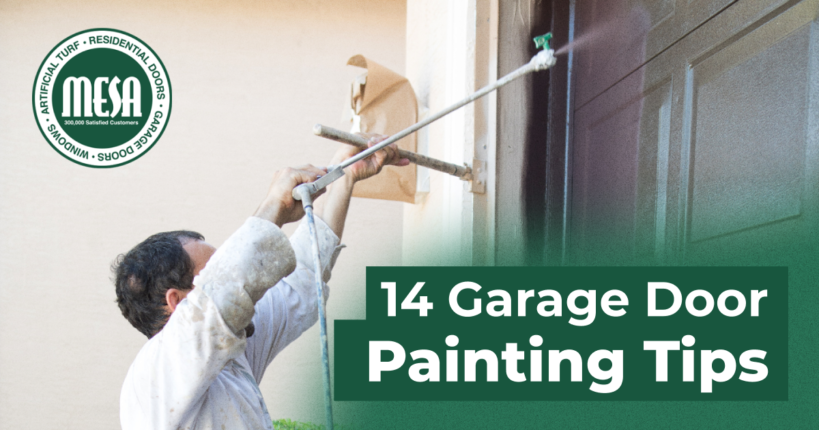
 

14 Garage Door Painting Tips

Garage door painting, plus other considerations (like the type of garage entry door to install), can impact your home’s function and curb appeal. Many garage doors need a fresh coat of paint every few years. It not only looks good but can also protect the door. Whether you’ve never painted a garage door or it’s been a while since you last did, here are 14 garage door painting tips to help you along.

  1. Move Your Vehicle Outside: It doesn’t directly affect the paint job, but you should move your car and other items out of the garage. Decluttering the space protects valuables from stray paint droplets and gives you more room to work.
  2. Wait Until a Cool Day: When planning to paint your garage door, check the weather forecast. A temperature between 50℉ and 75℉ is best for painting. Also, plan the project for a three-day window when there’s low humidity, and try to time it for when you can work out of direct sunlight.
  3. Prep the Garage Door: Wear work gloves, safety goggles, and a dust mask. Use a wire brush to remove any rust. Then use fine-grit sandpaper to sand any rough areas. This will create a smooth base to work with when you start garage door painting.
  4. Clean the Garage Door: The best paint job is on a clean, smooth surface. To clean your garage door, use a sponge or cloth that’s been soaked in warm soapy water. You can then rinse the surface clean with a garden hose. Avoid using a pressure washer. Using clean towels or rags, dry the garage door and wait an hour for it to air dry.
  5. Protect Anything You Don’t Want Paint On: Place drop cloths under the door to avoid getting paint on the floor or your driveway. To protect doors, you can use masking tape and paper to create a type of awning. To protect windows, trims, locks, and handles, you can use heavy-duty painter’s tape.
  6. Set the Garage Door in Manual Mode: Disconnect the door from the electric garage door opener. You can then move the door manually, raising and lowering it as needed to avoid straining yourself while painting. 
  7. Find a Paint Primer Suited for the Material: Check the product label for details on the material it’s suited for. Use an exterior paint primer. When priming inset panels, use a 2-inch paintbrush with nylon bristles. The stiles can then be primed using the brush or a ¾-inch roller. Paint the trim last. 
  8. Work from Bottom to Top: Now that your door is in manual mode, you can start painting it from the bottom, starting with the inner panels and working outward. Lower the door as you go, until you reach the top portion.
  9. Purchase a Protective Paint: A garage door paint that is UV-, rust-, and moisture-resistant will last longer, making your effort worth it.
  10. Consider Using a Spray Paint: Spray painting your garage door is a faster process. It also makes it easier to reach tight areas, which can be more challenging with rollers and brushes. When spray painting a garage door, go from left to right, then up and down. Use a small or medium brush to paint the trim.
  11. Let the Door Dry in the Lifted Position: Once the door is fully coated, lift it so it’s facing toward the ceiling. This protects wet paint from insects and speeds up the drying process. But first, make sure the ceiling is free of dirt and dust.
  12. Fill in the Gaps: To be as thorough as possible, fill in the gaps after the paint dries. To paint the gaps between each section, lower the door section by section to access one space at a time. When the seam is open, you can paint between the segments and leave the door partially open until these areas dry.
  13. Wait at Least 12 Hours to Apply a Second Coat: If the paint is uneven or the old color is showing through, let the first coat dry for 12 hours and then apply a second coat. Remove any tape you applied and let the paint dry overnight.
  14. Use an Oil-Based Primer and Paint for Aluminum Garage Doors: Wooden garage doors are easier to paint. Since steel and aluminum doors are already coated, paint jobs need to be redone every few years. An oil-based primer and paint should be used. While more difficult to clean up, the paint can help match a repainting job on your home’s exterior, add a contrasting color, or replace a worn baked enamel or powder coat.

Schedule Garage Door Repair or a Free Estimate

Mesa Garage Doors installs and repairs garage doors in Los Angeles and surrounding areas. Factory-trained, our technicians can provide any garage door service you need. For a free repair estimate, advice, or more information on garage door painting, call (800) 893-1107 or email us at info@mesagaragedoors.com

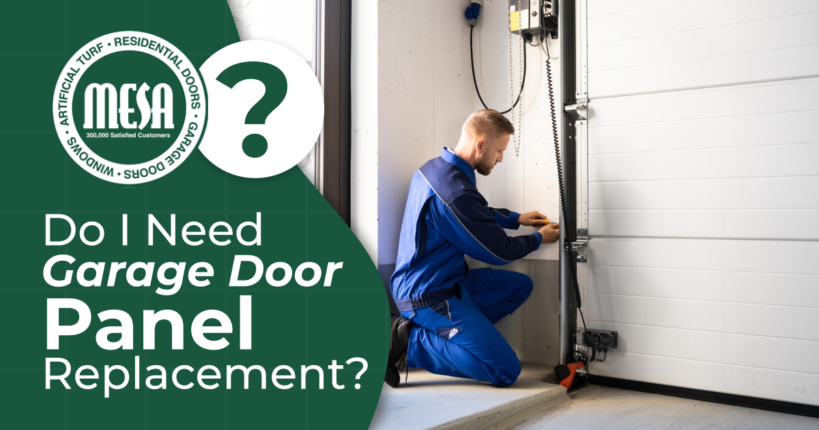
Do I Need Garage Door Panel Replacement?

When your garage door is damaged, garage door panel replacement can avoid having to replace the entire system. It can be cost-effective if the damage is limited to a single panel. Depending on its design and construction or, for example, the reason the garage door won’t close in the rain, you may not be able to replace individual panels. Consult with the manufacturer or a garage door professional to determine your best option. 

*It costs about $350 to $700 to replace a garage door panel (some jobs can exceed $3,000), so you want to proceed with caution.1

Why Should I Replace a Garage Door Panel?

If the damage is limited and doesn’t compromise the structural integrity of the door, garage door panel replacement is feasible. Some of the reasons to consider this option include:

  • Collisions: Backing your vehicle into the door or an impact by a ball or other object can cause localized damage, such as scratches, dents, and deformities.
  • Wear and Tear: Garage door panels can be stressed by the repeated opening and closing of the door. Hinges can weaken and cracks can form in individual panels.
  • Exposure to the Elements: Rain, snow, wind, ultraviolet light, and more can wear away at garage door panels over time. Fading, discoloration, rust, warping, and general deterioration may warrant replacing panels.
  • Simpler Fixes Aren’t Possible: Depending on the scale of the damage and the material, small dents and scratches can be fixed without replacing the panel. Consult with a professional to determine if panel replacement is the best option.

Whether individual panels can be replaced depends on the garage door model. Some garage doors are designed as single, cohesive units. These must be replaced as a whole. But again, it’s best to consult with a professional who’s familiar with different makes and models and their repair requirements.

Can I Replace More than One Garage Door Panel?

There are different approaches to garage door panel replacement. In many cases, you can save and avoid having to replace the entire door. If a panel can be replaced while maintaining the door’s safety, structural integrity, and functionality, the choices may include:

  • Single-Panel Replacement: If the damage is limited in scale, and you can match a single replacement panel to the rest of the door, one panel can be replaced. Matching the panel allows for seamless integration and helps preserve the door’s original design. It can also resolve issues to avoid more extensive repairs and extend the unit’s life.
  • Multi-Panel Replacement: If your garage door has numerous panels and multiple damaged sections, you can, for example, replace two panels. However, the cost of repairs will be higher than replacing a single panel (sometimes as much as a garage door replacement). If the repair cost is exceedingly high, replacing the entire system makes more sense.
  • Color- and Shade Matching: Whether you’re replacing one or two panels, they must match the other panels on your garage door. Every detail must be considered. The color and shade of your garage door can change over time. Replacing a faded panel won’t have ideal results if you don’t match the color. A garage door professional can help maintain harmony by finding the right panel or properly painting or staining it.

Is DIY Garage Door Panel Replacement Possible?

Replacing a garage door panel requires special skills, tools, and safety precautions. The weight of the door can make it very challenging. There’s also a high risk of additional damage or injury. A professional also knows every factor to consider, including:

  • Your garage door’s/panel’s measurements
  • The manufacturer and model of the door
  • The types of joints and hinges used 
  • How to match the color of a replacement panel with the rest of the garage door 

Therefore, a contractor can ensure a seamless installation process.

When Should I Consider Complete Garage Door Replacement?

Replacing just one or two panels may not resolve the problem if your wooden garage door is sagging and there are gaps when it closes. The issue may be with your automatic garage door opener. Cracked wood, peeling paint, poor performance, or a lack of efficiency can indicate more widespread problems that can only be fully resolved by replacing your entire garage door system.

Call Mesa for Help with Garage Door Panel Replacement

At Mesa Garage Doors, we can fix all types of garage doors, no matter the type of damage. Our technicians can resolve the issue if your garage door won’t close, makes noise, is uneven, or reverses direction. From broken springs to damaged panels, our team can quickly repair and restore your garage door. Get your free garage door repair estimate online or call (800) 893-1107 to get started; we are available 24/7.

Source:

  1. https://www.angi.com/articles/how-much-garage-door-panel-replacement-cost.htm  

Can Windows Be Installed in an Existing Garage Door?

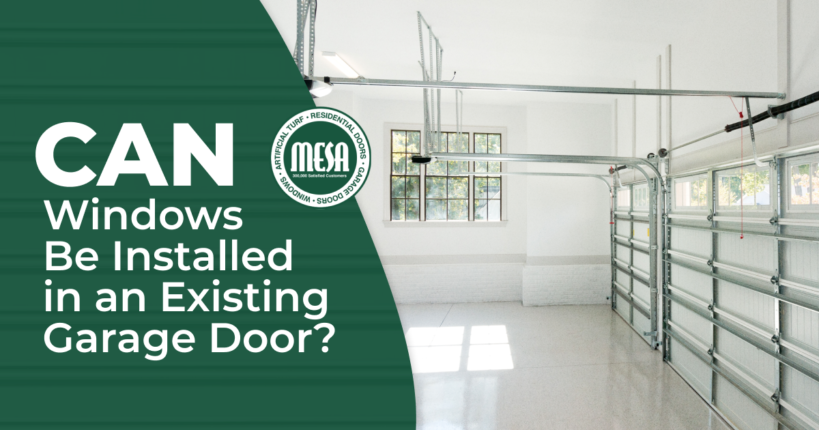
Homeowners often ask if windows can be installed in their existing garage door. Replacing a modern garage door system can be expensive, so this is an interesting question. But yes, you can install garage door windows in your existing door. They’re one of the best custom garage door features you can add.

Garage door windows have a visual appeal that makes them popular. They can help boost the curb appeal of your home and let natural light into your garage (providing warmth and brightness that reduces reliance on electric heating and lighting). But if your garage door doesn’t have windows, how do you enjoy these benefits?

Considerations for Installing Windows in Your Garage Door

If you are thinking of retrofitting your existing garage door with windows, here are some of the most important factors to consider:

  • The Type/Brand/Dimensions of the Door: Windows are a common feature on Victorian, Georgian, Colonial, Edwardian, and some contemporary garage doors. The brand of garage door is important. Windows are more suited for some door makes and models than others. Depending on the brand, dimensions, thickness, and features like embossed motifs or deep grooves, you may not be able to install windows in the door.
  • Window Placement: Think about why you’re installing windows on your garage door. Windows on the upper section let in plenty of daylight but also maintain security. It’s much harder for curious onlookers to peek into your garage—unless they’re extremely tall. The third section of your garage door (from the bottom) is a good place for windows if you want the ability to look in and out.
  • Privacy: No matter where you place garage door windows, you can install frosted glass that lets in light but doesn’t let one distinguish what’s on the other side. Or, two-way mirror glass can be installed so you can look out but not see in. Textured, opaque, and other glass styles are also available.
  • Glass Features: The window glass may be plain and simple or add detail to enhance the garage door’s overall design. Glass can be tempered or laminated to increase safety in case it breaks. Insulated glass can help retain heat or keep it out to improve comfort and efficiency.
  • Style of Your Home and Its Windows: The windows on your garage door should complement the style of the windows on the front facade of your house. Square-shaped garage door windows may not pair well with arched or oval-shaped glass on your front door. The resulting contrast would look strange. It’s best to use shapes, designs, and patterns that are already in your home. Try to create a sense of harmony.
  • Spring Balance: Adding windows to your garage door changes the balance of its weight. Therefore, the spring system can be thrown off balance. Garage door spring systems are calibrated to allow for about a 5% variance in weight. Any significant changes can strain the garage door opener, so you need to change the spring system if you’re installing windows on your garage door.

Frequently Asked Questions

What Types of Windows Are Used for Garage Doors?

Small areas of glass installed as inserts are called garage door lites. Mimicking older window styles, these divide a large pane of glass into smaller parts. There are also lites that are separated by their own structural frame. However, larger areas of glass can be used with garage doors; if desired, a large glass pane can be divided into lites using decorative elements.

Can Garage Door Windows Be Replaced?

Replacing windows on a garage door not originally built with them can be a complex undertaking. It’s easier to replace windows on a door that was originally designed with glass inserts or grilles. Consult with the door manufacturer to learn about your options.

What Window Styles Are Available for Garage Doors?

Garage door windows generally come in a square or rectangular style with a 90-degree angle in each corner, or arched style windows with bottom corners at 90 degrees and top corners with sharper angles. Arched windows are sometimes placed above square windows.

Contact Mesa Garage Doors

As Southern California’s leading garage door company, we offer many garage door products with window features. We have highly experienced installers and repair technicians. While garage door windows can be installed in doors that were originally built without them, it’s best to consult a professional familiar with garage door design and the many options available on the market. For residents in Los Angeles and Orange County areas schedule a new garage door or repair estimate online or call us at (844) 473-2866 today.

8 Reasons to Hire a Garage Door Installation Professional

Hiring a garage door installation professional has many advantages over attempting a DIY project. A garage door is frequently used and can have a big impact on home value. Nonetheless, many homeowners have concerns over the cost of garage door installation. An experienced installer will ensure a job well done. This is important because of the potential safety risks and high return on investment.

You should hire a pro for garage door installation near you because they:

1. Are Properly Equipped and Experienced

To properly install a garage door, one needs various tools an ordinary person doesn’t often have. These include bolt openers, tension wrenches, and track alignment devices. Torque wrenches are used to install bolts and fasteners so they’re not too loose or too tight. 

Professionals know how to use these tools. They can also handle anything that goes wrong during the installation process, ensuring the job gets done right the first time. A garage door technician can do things you can’t learn overnight from a tutorial video.

2. Understand the Complexities of Garage Doors

A garage door is a complex assembly of panels, springs, hinges, tracks, rollers, pulleys, and electrical components. These all work as a system so the door can open and close smoothly. One mistake with the tiniest part can lead to major damage (considering the weight of the door). The garage door opener is another consideration; a contractor can choose the right type of opener mechanism, properly secure it, and correctly wire it.

Other variables include a door’s wind rating, insulation, and impact resistance. Precise measurements are also important, as one incorrect calculation can lead to gaps in insulation, poor sealing, pest infestations, and a door that touches the ground with too much force.

3. Can Pick the Right Door for Your Home

Garage doors come in many styles and are made of various materials. A garage door installation professional can match the right type of door and best-suited materials with your home, its location, and the climate you live in. The specifics of your existing door and whether they’re suited for your home are assessed to help you make the best choice. A technician can also help with custom design options such as paints, finishes, glass, panel styles, and hardware accessories.

4. Can Work Around the Safety Hazards

The door installation process has many safety risks. A garage door mishap can cause a big mess,  pinched finger, or crush injury. Installing a garage door requires handling heavy components, high-tension springs, electrical parts, and tools you’re not familiar with. Professional garage door installers are trained to work with these, follow strict safety protocols, and take preventative measures to avoid injuries or property damage.

5. Can Ensure Your Home Is Secure

Setting up a garage door and its components is one part of the process. Another is installing the automatic opening and closing mechanism and making the proper connections. If there’s any lapse in how the garage door functions, it can make your home less secure. It’s best to hire a professional for garage door installation near you to ensure each part is wired correctly and operates as expected. This can make your home less vulnerable to intruders.

6. Get the Job Done Efficiently

Without experience, installing a garage door can take many more hours than expected. An industry professional can ensure a seamless installation. Their expertise allows them to work quickly and get the job done without hassle. Going the DIY approach can result in frustration, overseeing important details, and trial and error that wastes time and energy.

7. Comply with the Warranty

Professional installation typically includes a warranty. It covers repairs or replacements if anything goes wrong with your garage door after a technician installs it. Warranties provide peace of mind and can save you money. Your garage door is not likely to be covered by a warranty if you try to install it yourself.

8. Avoid Common Mistakes

Any mistakes can compromise the garage door’s performance and safety. For example, inaccurate measurements can lead to poor clearance and the door may not fit. If you don’t get the spring tension right, the door may struggle to open or suddenly slam shut. Other potential errors include misaligned tracks, which can cause the door to jam or derail, or incorrectly installed sensors, making the door unsafe to operate.

Hire Mesa Garage Doors for Door Installation Near You

Our professional garage door installers are trained, prompt, and efficient. They avoid the risks of DIY installation and the cost of repairs before you even use your garage door. For an estimate on the cost of garage door installation in your Southern California home, and service by experienced contractors, book your appointment online or call (800) 893-1107.


Why Would My Garage Door Spring Snap?

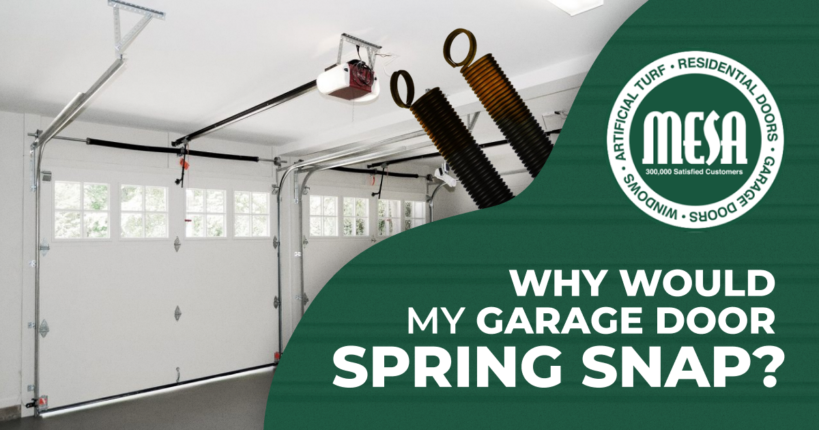
There’s never a good time for a garage door spring to snap. You may arrive home after a long day at work or in a hurry to leave, and your garage door won’t work. Maybe you’re lucky enough to hear the sudden bang of a spring failing. Once a garage door spring has snapped, the only option is to replace it; this is a common repair since torsion and extension springs have a limited lifespan. Here, we’ll look at the reasons for garage door spring repair.

Reasons Garage Door Springs Snap

Extension springs last seven to 12 years on average, and torsion springs can last up to 15 years. Their lifespan depends on how many cycles they’re rated for. How frequently you operate the garage door and environmental factors can impact a garage door spring’s lifecycle. 

If not replaced beforehand, the spring will fail at the end of its life, leaving a gap, loose cable, or a garage door that’s crooked, struggles to move up or down, or falls to the ground. These are the most common reasons this can happen:

  • Wear and Tear: Garage door springs usually last about 10,000 cycles (one cycle is the garage door opening and closing). Higher-end springs can last for 20,000 cycles or more. Homeowners typically use their garage doors at least twice a day. The springs will eventually wear out due to frequent motion and the weight of the door, usually showing signs of damage before they break.
  • Excessive Tension: Too much tension can weaken garage door springs. Made of tempered steel, they will break under too much stress. Regular maintenance can reduce the strain on the springs; otherwise, they are at risk of failing prematurely and you’ll need garage door spring repair.
  • Extreme Temperatures: Garage door springs are more susceptible to breaking during a heat wave or cold spell. Insulating your garage can mitigate the effects of dramatic fluctuations in temperature. Installing weatherstripping also provides some protection. Otherwise, rapid expansion and contraction of metal when temperatures change can cause them to become brittle and fail.
  • Jammed Door: Garage door tracks can fill with dirt, debris, and grime. Dirty tracks can damage rollers, causing the door to jam and putting excess stress on the springs. The extra force can cause a spring to snap abruptly or speed up wear and tear so it fails prematurely.
  • Rust and Corrosion: When rust forms on a garage door spring, it increases the amount of friction as the spring moves, shortening its lifespan. Corrosion physically weakens the coils, so they fail sooner than expected.
  • Poor Installation: If the spring is the wrong size or installed improperly, it’s unlikely to handle normal use without wearing out faster. The spring can suddenly fail. To avoid such a situation, avoid DIY spring replacement and hire a certified technician with experience replacing garage door springs in residential settings.
  • Lack of Maintenance: Lubricating the spring with a silicone-based or white lithium grease can reduce friction, slow down corrosion, and increase life expectancy and the time between garage door spring repairs. Springs should be lubricated three or four times a year. Another helpful tip is to reduce the spring’s exposure to moisture.

Also, make sure to follow other garage door maintenance recommendations. These include checking for signs of damage or wear and testing the door’s balance. To do this, pull the emergency release cord to disconnect the garage door opener and lift the door halfway. When you let go, it should hold it still. However, if the door falls on its own, the springs should be adjusted or replaced.

Contact Us for Professional Garage Door Spring Repair

Mesa Garage Doors safely, quickly, and effectively replace garage door springs in homes across Southern California. We can also fix garage door openers, cables, tracks, rollers, and panels. Our operators are available 24/7 in case of an emergency. To request garage door spring repair or any other service we offer, call (714) 559-3696 today.

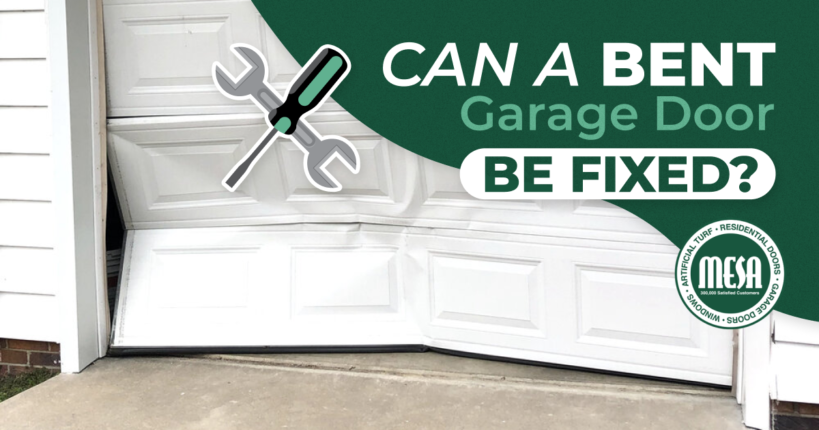
Can a Bent Garage Door Be Fixed?

A bent garage door can be fixed, but how you proceed depends on the issue. You may be tempted to try a DIY fix as soon as you notice the problem. But is this a good idea? The warranty may dictate what types of repairs must be done professionally. Proceeding with a repair without expertise or a license can risk voiding the warranty. The best way to start is to ask a garage door repair company if you should move forward or schedule an appointment.

You can fix some garage door issues. Some examples include cleaning dirt and debris from the tracks, tightening nuts and bolts, adjusting a bracket, or lubricating springs, rollers, and hinges. But more advanced tasks should be handled by a skilled technician. 

Why Does a Garage Door Bend?

A garage door can bend or dent for many reasons. The most common causes include an impact by a vehicle or sports equipment, falling debris, or hail. An obstruction in the tracks can also bend the garage door. Other causes include contact with power tools or use of improper cleaning equipment.

The consequences of a bent garage door include moisture intrusion (if the weather seal is broken), leading to water damage. A bent panel can also obstruct the garage door opener. Therefore, the door may not fully open or close and can be damaged more by trying to operate it. If there’s a bent panel, you should call for garage door repair right away.

How a Bent Garage Door Is Fixed

A bend in a garage door panel can damage the track, a roller, or a bearing. It can also cause a lag in movement that strains the garage door opener. If a panel at the bottom of the garage door is bent, it can often be repaired without much hassle.

However, if the garage door is bent in the middle, repairing it may take more time and effort. Replacing the entire panel requires removing all the panels attached to it. Extensive fixes can be quite costly and require a professional to replace the garage door.

Fixing a bent garage door can be accomplished in the following ways:

  • Hammer Out the Bend: A bend in a garage door can be hammered out if the damage isn’t extensive. Use a soft rubber mallet or block of wood if going with this approach. Place the mallet or wood block on the bend (from behind where it protrudes outward) and hold it tight against the surface. Strike the block lightly. Using too much force will only make the dent bigger.
  • Use Suction Cups: Suction cups can be used as an alternative if the dent is small. Place the suction tool over the dented area. The pressure from the suction device straightens out the damaged segment. This method is most effective for metal garage doors. 
  • Straighten the Panel with Heat: When you heat a piece of metal, it can take its original form as it cools. First, place a piece of aluminum foil on the dented section. Then, apply a heat source along with compressed air. This quickly heats and cools the panel, which straightens it within a few minutes.
  • Fill the Dent: If the door still opens and closes normally, filling the dent is possible. To do so, start by sanding the area. This smooths out any jagged fragments. Then, fill the dented space with an auto-body filler (mix in a hardening agent if the product instructions call for it) and apply the filler. Once it’s smooth, dried, and sanded, apply a coat of paint that matches the garage door (or paint the entire door to match and completely hide the bend).

When Should I Replace the Garage Door Panel?

A technician should replace a bent panel if you can’t fix it.  Replacing a garage door panel requires a few tools, including vise grips, a hand-operated winch, and an impact drill. The vise grips fit under the garage door once it’s set to an adjusted height. The garage door cable must be tensioned with a come-along, which is a type of hand ratchet puller. You’ll need to remove the panel’s hinges and crank the ratchet puller to create a space to remove and replace the damaged panel.

A garage door bottom panel, while more prone to damage, requires a different approach to replacement or repair. Neglecting to repair it can result in damage to the entire system. First, unplug the garage door opener. To replace a bottom panel, a hoist is needed to raise the garage door, and a vise grip is used to hold the cable to the drum. Removing and replacing the bottom section requires many precautions and the hinge bolts holding it in place can be difficult to remove.

We do not recommend replacing a bent garage door panel without the help of a professional.

Contact Us for Bent Garage Door Repair

At Mesa Garage Doors, we specialize in all types of garage door repair. If a door panel is bent, we can find a solution depending on the location and size of the bend and the extent of the damage. Don’t try to fix any garage door issues yourself. Our team of skilled professionals is trained to quickly, safely, and effectively resolve them. For residents in Los Angeles and Orange County areas schedule a new door or garage door repair estimate online or call us at (844) 473-2866 today.


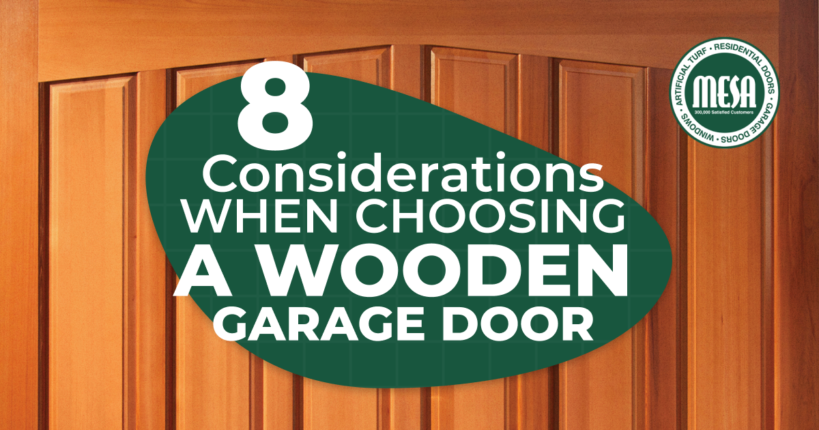
8 Considerations When Choosing a Wooden Garage Door

Choosing a wooden garage door requires careful planning, as this beautiful addition to your home can last many years. The design can be traditional or contemporary. Mesa Garage Doors proudly offers a wide range of types and styles of residential garage doors. Using our knowledge and expertise, we’ll explain some of the most important considerations when choosing a new one.

1. Type of Wood

It’s one thing to know you want a wooden garage door. However, there are different species of wood used to create custom garage doors, each with unique properties. The grain pattern and color are the main differences among them. For example, Western Red Cedar has a tight, straight grain with a reddish- or pinkish-brown color and darker red and brown streaks. Douglas Fir has a straight or slightly wavy grain with a light brown color plus hints of red and yellow.

When selecting a wood type, consider traits such as strength, durability, resistance to decay or shrinking, and how well it holds paints, stains, and finishes. Our garage door professionals can help you understand the pros and cons of common wood options.

2. Garage Door Location

The more an installer knows about where the garage door will go, the more advice they can provide. Sun exposure is an important consideration and can cause issues with dark stained doors that require more maintenance. Also, consider water; if there are roof gutters or overhangs nearby, the door won’t be as protected and may require more frequent maintenance to address water damage. It may also need to be re-coated more often.

3. Quality of Garage Door Construction

The use of high-quality materials and construction techniques can impact the appearance of your garage door. A well-constructed door is less prone to warping due to temperature extremes. Insulation helps too. The more resistant to heat transfer a door is, the better it holds up in warm or cold temperatures. 

Wooden garage doors typically have built-in insulation. It helps reduce wear and tear and can help make your home more comfortable and energy efficient. It also blocks the transmission of sound, so your garage is much quieter.

4. Garage Door Type

Wooden garage doors have many design options. The type you choose affects your home’s exterior aesthetics and curb appeal. Common styles include traditional raised-panel garage doors with symmetrical rectangular panels (can be long or short). Modern wood garage doors are sleek and sometimes incorporate glass and metal, while carriage house garage doors have a farmhouse-like appearance and combine a rustic design with modern lines.

5. Ease of Installation

A wood garage door’s weight makes it less easy to install than a steel one. The use of an automatic garage door opener is even more important. It can make operating a heavy wooden door safer. Also, consider how the door will be stained or painted. A stain-grade garage door uses a different wood species than a paint-grade door, and the darker the paint/stain color, the faster it will fade.

6. Add-On Hardware

Wooden garage doors provide a classic look that can be enhanced with functional and decorative hardware. Latches and strap hinges go well with carriage house-style doors, while pull handles and rings come in numerous styles to accommodate any garage door. Depending on the model, custom wood jambs and casings, unique door stops with weather seals, and specialty glass may be available.

7. Maintenance

Wood is vulnerable to the effects of sunlight, wind, and water. Even the top coat of a wooden garage door can break down with exposure to the elements. Re-coating the door each year can help protect it and avoid more significant maintenance and repairs later.

Cleaning a garage door made of wood is generally simple. Just use a mild detergent and a soft cloth or bristle brush. Once the door is wiped clean, rinse it with a garden hose or sprayer at low pressure.

8. Cost

Wood garage door installation costs more because it can be complex and time-consuming. A professional can install a steel garage door much faster. However, the actual installation cost varies depending on the type of wood, the door thickness, the use of paints or stains, and whether custom designs or accessories are selected.

Contact Mesa Garage Doors

Throughout Southern California, we provide a wide range of garage door styles, from classic to modern. Our team can accommodate single-car or multi-car garages. We also provide sectional garage doors that look like old-fashioned swing doors or custom doors with or without windows and design elements such as arched or squared tops. To understand your wooden garage door options and receive a new door estimate, contact us online or call (714) 984-0563.

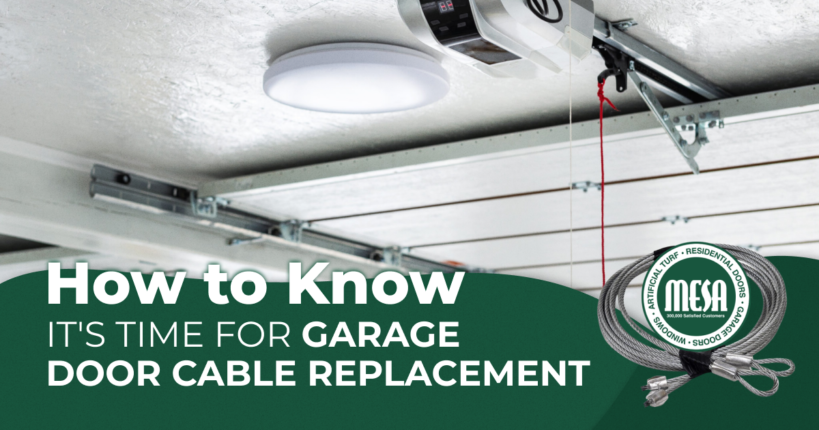
How to Know It’s Time for Garage Door Cable Replacement

Knowing when it’s time for garage door cable replacement is important to protect your garage door and your safety. High-tension cables support the door as it moves. Mesa Garage Doors is a name you can trust for high-quality garage door replacement. We also know a lot about garage door cables. 

The cables attached to your garage door, which usually run through the springs, are under high tension. They are usually attached to the bottom brackets and run over the pulleys. While the cable will prevent the spring from launching across the room if it fails, the cable can be dangerous if it breaks. After all, it must support the entire weight of the door. 

However, you can take action and call a professional if you notice these signs you need garage door cable replacement:

A Cable Is Loose or Drooping

A bad cable may appear to be drooping, dragging, or frayed. If it appears loose or poorly attached, call for help. The same goes if it has fallen. Operating the garage door at this point can cause it to be damaged or fall to the ground and shatter to pieces. It can also result in other issues that require replacing the entire garage door. For example, a frayed cable can mean the spring has weakened and is putting more stress on it.

You See Rust on a Cable

If you see rust on a cable when you inspect it, assume the cable has weakened and have it replaced. Oxidation can mean the cable is on the verge of breaking. Using a spray lubricant once a year can prevent, slow down, or reduce the risk of corrosion.

The Door Is Misaligned

A bad cable can cause the garage door to open or close unevenly. It may appear lopsided, which can damage the track and strain the garage door opener motor. If misaligned, the door may also jerk instead of moving smoothly. Whether the alignment of the door is off is usually easy to notice. It may also suddenly stop.

The Door Doesn’t Respond Correctly

If you activate the garage door opener and it struggles to open, or there’s a delay of a few seconds or minutes, it can signal various issues. A malfunctioning cable can prevent parts from catching. Therefore, even if the garage door tries to open, it can take a long time to do so. Both cable and spring issues can cause this to happen.

Loud Noises

The high tension of the springs and cables can cause loud grinding, clashing, and other noises. Call a technician if applying a lubricant to the springs doesn’t lessen the noise. Don’t wait to call for help if there’s a sudden loud bang from your garage.

The Bearings Are Worn Out

Worn bearings can damage garage door cables. They can cause loud grinding or squeaking sounds while the door is operating. Check for marks or other signs of damage on the cables if you hear these sounds. Friction between the bearings and cables can also cause a burning odor. Call for garage door cable replacement if you see, hear, or smell something unusual.

A Cable Has Fallen

Loose tension is bad enough. However, if a cable has fallen and is hanging around the door, do not attempt to operate the garage door. Check to see if the fallen cable is still attached to the drum it’s supposed to wind around. Try to describe the issue to the garage door repair company when you call. It will help the technician more quickly diagnose and resolve this and other potential issues when they arrive.

Call for Garage Door Cable Replacement

We recommend inspecting your garage door cables and other components at least once a year. If there are any signs of damage, rust, or failure, contact Mesa Garage Doors to have the cable replaced right away. Our repair professionals will quickly inspect the system, diagnose the problem, and replace any cable or part that is damaged. When it’s time for garage door replacement, we’ll help you choose the best garage door material type, complement your entry door, and consider add-ons such as windows and insulation.

If you notice signs of trouble, you can reach us 24/7. Call (714) 515-7645 whenever you need garage door cable replacement or any other service.

What Does Garage Spring Repair Cost?

garage spring repair cost

One of the most common garage door services is garage door spring repair. According to Angi, garage door spring replacement can cost between $150 and $350, including materials and labor. If additional repairs are required, you may spend up to $500. A double door generally costs an extra $15 to $30 per spring.1 

Garage doors have two springs—one on each side. It’s best to replace both simultaneously, even if only one has gone bad. It’ll help maintain the door’s balance, and you’ll likely save by having both replaced in the same visit (rather than requiring a technician to return when the second spring fails).

How Is the Cost of Garage Spring Repair Calculated?

A few factors impact how the cost of garage door spring repair is determined. Ask for a breakdown of the costs when you receive a quote. You can’t typically repair a spring; the entire piece must be replaced, but the part isn’t the only thing you pay for. The garage door spring replacement cost includes the following:

  • Materials: A set of two springs for a double garage door usually costs between $60 and $150.2 Brackets and other hardware costs extra. Your garage door repair technician will explain all the parts and materials you need, plus their costs.
  • Labor: Garage door repair professionals may charge $75 to $150 for the service call.2 The hourly rate varies with each contractor. Replacing garage door springs usually takes about one to two hours.
  • Garage Door Type: The type of springs needed depends on the garage door you have. Sectional garage doors (the most common in U.S. homes) and tilt-up garage doors use extension springs. However, a roll-up garage door uses torsion springs that are more expensive to replace. These are more often used in commercial settings.
  • Spring Type: Extension springs usually cost $50 to $100 each with labor. Torsion springs cost $75 to $150 to replace. A heavy-duty door may use commercial-grade springs, which cost $100 to $500 just for parts; labor can add an extra $150 to $300.1
  • Location: The cost of garage door spring replacement can vary by region. That’s because garage door contractors face different levels of supply and demand, which influence prices. Generally, repairs cost more in urban areas with a higher cost of living, but if a technician must travel long distances in a rural area, they may charge extra for the trip.

Other Factors for Garage Door Spring Replacement Cost

The urgency of the situation can significantly affect the garage spring repair cost. Emergency garage door repair contractors can send someone to your home any time, day or night. However, off-hours service will cost extra.

If replacing springs and cables together, expect to pay $175 to $450. Replacing cables involves a bit of labor, which can cost you between $75 and $200.1 If different jobs are performed in the same visit, the repair technician may give you a discount.

Switching spring types costs more than installing the same kind of spring you had. For example, switching from extension to torsion springs costs $400 to $800. The technician will remove all the old spring parts on your garage door and install a new system. You can also hire a contractor to tune up your garage door springs; this type of maintenance costs around $50 to $150.1

When Should I Call for Garage Spring Repair?

If a garage door spring breaks suddenly, you’ll hear a loud bang and there’ll be no question you need to call a professional. But the issue often starts more subtly. Knowing the signs a spring is failing can prompt you to hire someone to fix it before there’s a bigger problem. These include:

  • The Garage Door Is Squeaking: A squeaking sound is often caused by metal parts rubbing together, which increases wear. You may need to clean or lubricate the spring. But if there’s a worn-out spring, frayed cable, or bent track, call for help.
  • Garage Springs Appear Rusty: Moisture can cause a garage door spring to rust and deteriorate. Rust can be prevented with a silicone or lithium-based lubricant. Lubricate springs more often in coastal or other high-humidity climates.
  • The Door Isn’t Working Right: If the door is crooked, won’t stay open, or crashes down, the springs are likely broken. Other signs include the door not opening when the motor runs. The door may also move more slowly than usual, while a spring with a visible gap must be replaced right away.

Request Garage Door Spring Replacement from a Professional

At Mesa Garage Doors, we provide garage door spring repair for most makes and models of garage doors. All springs eventually break. Our skilled technicians select the correct-sized springs to maximize their operating life. But when you need new springs or any other type of garage door repair in Southern California, call us at (714) 462-3645.

Source:

https://www.angi.com/articles/how-much-should-garage-door-spring-replacement-cost.htm 

https://www.bobvila.com/articles/garage-door-spring-replacement-cost/