Garage Door Alignment Issues: Causes, Fixes, and Prevention Tips
Garage Door Alignment Issues - Causes, Fixes, and Prevention Tips

Dealing with a garage door that won’t close all the way? It’s a common and frustrating issue, especially since there are so many different potential causes. In this guide, we’ll be covering the most common garage door misalignment issues, their causes, and how the team of experts at Mesa Garage Doors can help.

garage door repair

Common Symptoms of a Misaligned Garage Door

Before we can explain why your garage door isn’t closing fully, we need to understand the symptoms of a misaligned door.

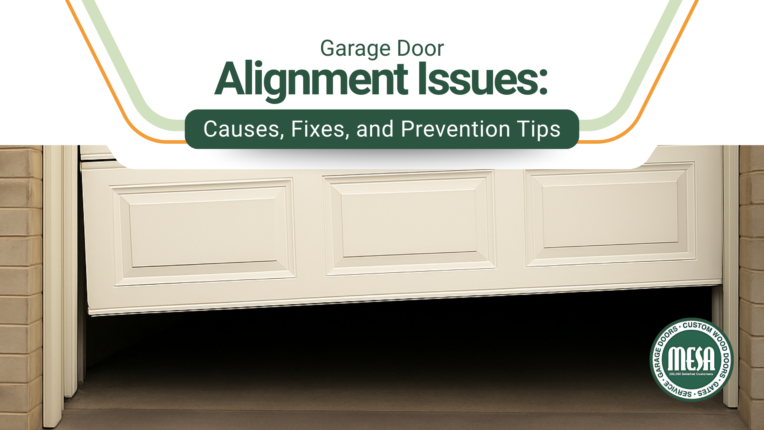
One common garage issue is when your garage door doesn’t sit fully square and aligned when closed, with one side sometimes being higher than the other, or the whole unit appearing to sit diagonally. This can happen when your garage door rolls on loose or damaged tracks, or has rollers that need repair.

Another common sign of a misaligned door is if your garage door closes, then opens again repeatedly. This isn’t just a frustrating problem; it can also leave your home vulnerable to thieves, wild animals, and weather damage. While several things can cause this problem, it’s usually a sign that you need garage door track repair.

Troubleshooting Alignment and Sensor Issues

It’s always worth trying a few garage door troubleshooting tricks to see if you can address the issue yourself without the need for a professional. At the same time, learn how to diagnose simple garage door sensor issues to see if fixing them helps resolve the problem.

Check for Visual Misalignment or Damage

The most obvious way to diagnose misalignment in your garage door is if you can visually spot anywhere that the rollers have become misaligned from the track. This can happen due to damage to the garage door or simply from wear and tear over time. If you can’t easily spot an area where the rollers are coming off the track or getting jammed, move onto the next steps.

Inspect and Clean Sensor

Another key troubleshooting step is to check your garage door safety sensor. Dirt, dust, and other debris can cause it to malfunction. Cleaning the sensor often resolves the problem and restores proper function.

Check Opener and Transmitter

Sometimes the problem isn’t with the alignment but with the opener or remote. Try replacing the batteries in your keyfob and reconnecting it to the opener unit to rule out transmitter issues.

garage door off track

Step-by-Step Fixes for Minor Garage Door Misalignment

If you identify minor misalignment with your garage door, there are a few simple repairs you can attempt before calling a pro. Here’s how:

  • Step one: Inspect the garage door tracks and rollers for damage, debris, or dents.
  • Step two: Clean the tracks with a damp cloth and mild detergent.
  • Step three: Lubricate the rails with WD-40 or a silicone/lithium-based lubricant.
  • Step four: Tighten hinges and brackets with a wrench or screwdriver.
  • Step five: Adjust the track alignment by loosening and retightening bolts while checking with a level.
  • Step six: Test the door by opening and closing it several times to ensure smooth operation.

When to Call a Garage Door Technician

If the above repair tips don’t help, it’s time to call a pro. Garage door technicians have the tools and experience to safely handle high-tension components like the spring system. Professional repair prevents further damage and protects you from injury.

Preventing Future Garage Door Alignment Issues

To prevent future alignment problems, adopt these maintenance practices:

  • Inspect and clean the track regularly.
  • Lubricate all moving parts routinely.
  • Tighten connections on brackets and hinges.
  • Check for visible damage.
  • Clean sensors to avoid malfunctions.
  • Schedule regular garage door tune-ups with a professional.
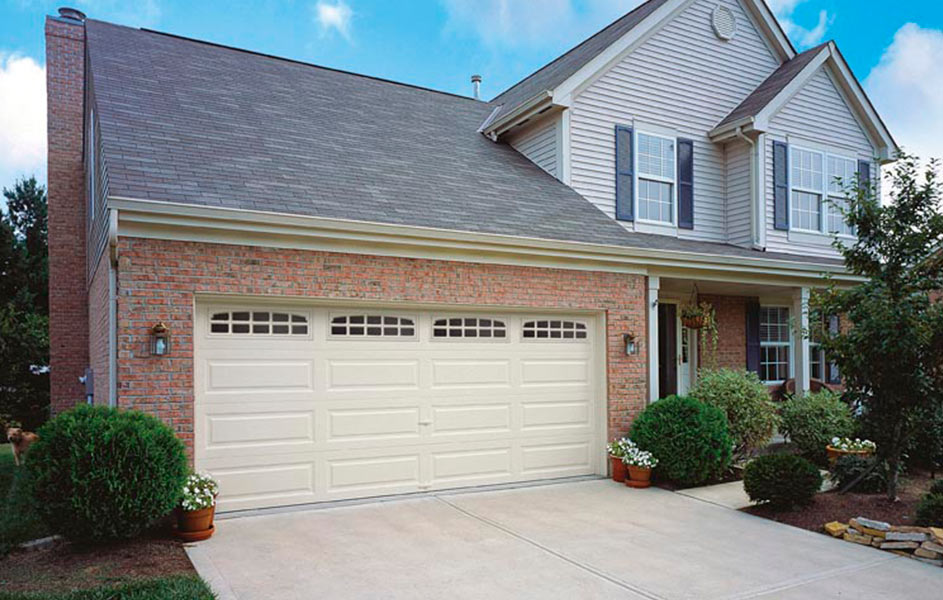
garage door installation

Protect Your Home with Proper Garage Door Maintenance

Protecting your home is simple when you have a great garage door team on your side. Mesa Garage Doors is here to help with repairs, diagnostics, and ongoing maintenance to keep your garage door in peak condition. For more information or to schedule service, get in touch with us today.

How To Troubleshoot a Garage Door That Won’t Close All the Way

How to Troubleshoot a Garage Door

A garage door that won’t close all the way is a security risk to your home, belongings, and family. It usually indicates mechanical problems or issues with the garage door sensor, and should be addressed immediately. Knowing how to deal with this problem and when to get professional garage door services can save you money and stress. Explore troubleshooting tips and learn reasons why your garage door is not closing fully.

Carriage Classic Garage Doors

Signs Your Garage Door Isn’t Closing Properly

The most obvious sign that something is wrong with your garage door is when it doesn’t close all the way, leaving a gap between the door and the floor. However, there are other signs that a garage door isn’t closing properly:

  • Strange noises: A garage door should never make extremely loud, banging, clanking, grinding, or screeching sounds.
  • Reversing: This is when your garage door closes, then opens again during the closing cycle.
  • Starting and stopping: A garage door’s operation should be smooth without abrupt starts and stops.
  • Uneven sealing: Gaps in your garage door allow moisture, air, and pests to enter.
  • Blinking opener: The garage door opener may start to blink in random patterns, indicating error or safety codes.

Top Reasons a Garage Door Won’t Close All the Way

Why won’t your garage door close? Some issues are easier to identify than others, and some depend on the type of garage door you have.

Safety Sensor Misalignment

Most garage doors have safety sensors at the bottom of the door tracks. These sensors create an imaginary line between each side of the door. If anything crosses this line, the door will stop closing and reverse direction. Over time, sensors can become misaligned due to accidental bumps, wear and tear, and vibrations.

Obstructions in the Door’s Path

If an obstruction is in the way of the sensor line, such as dirt, rocks, leaves, tools, or other objects, the garage door won’t close.

Track Misalignment

If the metal tracks that guide your garage door up and down become bent, shifted, or warped, the door may seize up. Misalignment can occur due to damage from a car collision, loose bolts, or normal wear and tear.

Damaged Rollers or Cables

The rollers and cables work with the spring system to guide your garage door. If they become bent, warped, or damaged, the door can seize up or fall down, creating a dangerous environment.

Opener Limit Settings

Your garage door opener has adjustable settings that determine how far the door travels on the tracks. Incorrect settings may cause the opener to believe the door is closed when it is still open.

Cold Weather or Debris

Cold weather can cause metal to contract and lubricants to harden, while ice buildup can prevent the door from closing fully.

How To Troubleshoot the Issue

How do you fix a garage door that’s not closing? Here are a few garage door troubleshooting tips to get your door back on track.

Inspect and Realign Safety Sensors

Check the safety sensors near the bottom of the garage door to ensure they’re aligned. A blinking light indicates misalignment, while a solid light means they’re properly aligned.

Clear Obstructions

Remove objects blocking the sensor line. Sweep the area to clear dirt, leaves, or debris.

Lubricate Tracks and Rollers

Use a lightweight machine oil or silicone spray to lubricate tracks, rollers, hinges, and other moving parts. Avoid heavy grease that can attract dirt.

Check Remote and Wall Switch

Test both the remote and wall switch. If the door only works with one, replace the remote batteries or have the wall switch wiring inspected.

Reset the Opener System

Unplug the opener for 30 seconds, then plug it back in to reset the system.

Adjust Travel and Force Settings

If you’re comfortable, adjust the screws and dials on the opener motor in small increments. If unsure, contact a professional—incorrect adjustments can create hazards.

Preventive Maintenance Tips

Homeowners should regularly maintain their garage door to prevent issues.

Regular Garage Door Tune-Ups

Schedule a professional tune-up at least once a year. This ensures your garage door is safe, efficient, and up to code.

Lubrication Routines

Lubricate hinges, rollers, springs, and tracks every 3–6 months. Avoid over-lubrication, which attracts dirt.

Visual Inspection Schedule

Inspect your garage door monthly for obstructions, frayed cables, or damaged parts.

Replace Worn Parts Early

Replace broken or worn parts promptly. If unsure how to install new parts, schedule service with a professional.

Match Garage Door to House Style

Contact Mesa Garage Doors Today

Mesa Garage Doors is your trusted local repair company in Southern California. If you’re considering upgrading your garage door or need maintenance service, contact us today for a free consultation and estimate.